
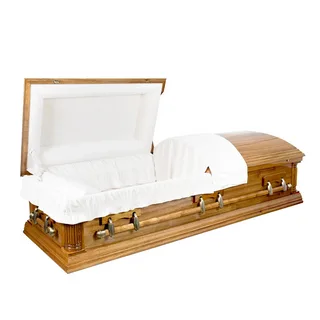
Families shopping for a casket usually need clear answers fast, not a rushed choice between a few showroom models with limited details. Price sheets rarely explain how couch style, interior fit, finish, and hardware affect the viewing, handling, and overall presentation. Missing that information can lead to rushed substitutions, added costs, and fewer suitable options than families expected.
Service timing, cemetery requirements, and product availability all shape which customization choices are actually practical when comparing a casket for sale. Interior fabrics and exterior finishes can look very different under funeral home lighting, while handle styles, lid design, and sizing can affect transport and presentation. A straightforward checklist covering structure, interior, exterior, function, and delivery timing helps narrow options quickly and avoid changes later.
Table of Contents
Customization Starts With Structure
A half-couch lid leaves the lower portion closed during a viewing, while a full-couch opens for a full presentation, and the choice changes what guests see from the first row and the back of the room. The lid configuration affects how flowers, lighting, and placement in the chapel read at a distance. Interior sizing needs to be confirmed early, since length, shoulder width, and depth vary by model even within the same material category.
Cemetery rules can narrow structure options, especially when a gasketed casket is required for sealing and approved interment. If a gasket is needed, confirm the locking mechanism and the seal condition at delivery so it matches what the cemetery accepts. Structural changes are harder to make late because the replacement must be in stock and available for the service date, so the funeral home can place the correct order on the first call.
Interior Personalization Choices
Interior lining shows clearly under chapel lighting, and the surface texture changes how the space reads from a few feet away. Velvet tends to look richer because it absorbs light, while crepe has a flatter finish that can appear cleaner and less reflective. The padding profile and stitching lines matter too, since sharp seams and even gathers look more finished than loose sections around the head area and corners.
Clothing and interior tone should be checked together to prevent harsh contrast at the face and hands, especially with bright whites, deep blacks, or strong pastels. If a family wants a standout detail, an embroidered panel, name, or faith or service symbol draws attention to a single area instead of spreading visual weight across the whole lining. Ask to see a sample insert or proof and confirm placement before the casket is prepared.
Exterior Design and Finish Options
High-gloss finishes reflect overhead lights and nearby floral pieces, while matte or brushed finishes mute reflections and read calmer from the aisle. Wood grain can look warm and traditional, and metal models tend to present a cleaner, more uniform surface with fewer visible variations. The exterior needs to fit the setting, since a chapel with bright spot lighting can make certain finishes look harsher than they appear under showroom lights.
Hardware style changes the silhouette even when the casket body stays the same, since swing bars, stationary handles, and corner accents draw the eye at different angles. Mixed tones can look unplanned, like bright gold hardware on a cool-toned shell, so it helps to confirm the finish and hardware in the same lighting before the order is placed. Ask the funeral home for a clear photo of the exact model number and hardware set that will be delivered.
Functional Add-Ons That Matter
Carrying hardware changes how steady the casket feels when it moves from the coach to the chapel and later to the graveside. Swing-bar handles give pallbearers more room for their hands and can reduce knuckle contact with the shell, while fixed handles sit closer and may feel tighter for grip. Hinge build affects how smoothly the lid opens and closes during a viewing, and a weak hinge can bind or sit unevenly when adjusted.
Some models include small interior compartments for keepsakes or documents, and it helps to confirm where they sit so items do not press against the lining or interfere with closure. Burial vault requirements can limit shell size, handle projection, and overall outside dimensions, even when the interior fit is right. Ask the funeral home to verify vault compatibility and carrier clearance before the casket is staged for transport.
Timing, Availability, and Delivery Control
Lead time changes quickly once a specific finish, interior, or hardware style is selected, because not every combination is stocked and ready to ship. Families comparing caskets for sale should ask first which models are available for immediate release, which ones need transfer from another warehouse, and which custom options could delay arrival past the service date. That one step narrows the list faster than any style preference.
Delivery details need the same level of attention as the casket itself, because a correct order still creates problems if the funeral home is not prepared to receive it on time. Confirm the exact model number, delivery window, receiving contact, and inspection process before the order is finalized. A written delivery plan gives the funeral home, supplier, and family one shared reference point and cuts down the chance of substitutions, missed handoffs, or last-minute changes.
Once you split casket customization into structure, interior, exterior, functionality, and logistics, the decision becomes a practical purchase instead of a rushed guess. Use a simple standard when comparing options: pick features that change the viewing, handling, or delivery outcome, and skip add-ons that only change minor appearance details. Confirm couch style, size, and any cemetery requirements first, then match the interior and exterior to the room lighting, verify functional hardware, and lock in a written delivery plan. Bring this checklist to the funeral home and ask for model-specific confirmation.