
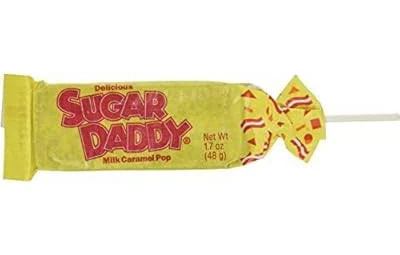
If you enjoy classic American sweets, Sugar Daddy candy is one name you may have come across more than once. This old-fashioned caramel treat has been around for more than a century, yet its basic concept remains surprisingly simple: rich milk caramel made to last longer than an ordinary bite-sized candy.
The candy was first introduced in 1925 under the name Papa Sucker and was renamed Sugar Daddy in 1932. Today, it remains part of the Tootsie Roll Industries family and is sold in several sizes.
So, what exactly is Sugar Daddy made from? How many calories does it contain? Is it gluten-free, and how is it different from Sugar Babies? Here is everything you need to know about this nostalgic caramel candy.
Table of Contents
What is Sugar Daddy Candy?
Sugar Daddy is a milk caramel lollipop with a firm, chewy texture. Rather than being a small caramel that you finish in a few bites, it is designed to be enjoyed slowly. The candy comes on a stick, giving it the familiar lollipop format while keeping the rich taste of caramel.
The current ingredient list includes corn syrup, sugar, palm oil, dry whole milk, whey, natural and artificial flavors, salt, and soy lecithin. Tootsie also lists milk and soy among the allergens associated with the product.
The texture is a major part of the eating experience. It starts out fairly firm, then becomes softer as you hold it in your mouth. You can suck on it slowly or chew it once the caramel has softened.
Unlike fruit-flavored lollipops or chocolate bars, this candy keeps the focus on a classic caramel flavor. That straightforward approach is one reason it has remained recognizable for generations.
What Does Sugar Daddy Candy Taste Like?
The flavor is primarily sweet, creamy caramel with a mild milky character. You will not find a complicated combination of fruit, chocolate, or sour flavors here. The appeal comes from the combination of sweetness and a dense caramel texture.
If you enjoy traditional caramel chews, the taste will probably feel familiar. The main difference is the format. Instead of receiving a small individually wrapped caramel, you get a larger piece attached to a stick.
The caramel also takes time to soften. That makes it different from hard candy, which can remain firm for most of the eating experience, and from soft caramel, which can become chewy almost immediately.
The History of Sugar Daddy Candy
The story of Sugar Daddy began in 1925, when the James O. Welch Company introduced the candy as Papa Sucker. It was a caramel confection served on a stick, giving consumers a different way to enjoy caramel at a time when candy products were becoming increasingly varied.
The product received its current name several years later. In 1932, Papa Sucker became Sugar Daddy, with Tootsie explaining that the name was intended to represent “a wealth of sweetness.”
That name change became an important part of the brand’s story. The company later introduced Sugar Babies, creating another familiar name within the same family of caramel products.
When Was Sugar Daddy Candy Invented?
Sugar Daddy was introduced in 1925 by the James O. Welch Company. At launch, it was known as Papa Sucker. The product was already built around the caramel-on-a-stick concept that consumers still associate with the brand today.
The candy’s long history is notable because many confectionery products from the early 20th century have disappeared or changed considerably. Sugar Daddy, however, has retained its core identity.
Why Was It Renamed Sugar Daddy?
In 1932, the company changed the name from Papa Sucker to Sugar Daddy. Tootsie states that the new name was meant to suggest “a wealth of sweetness.”
The new name was shorter, memorable, and easy to recognize. It also provided the foundation for the names of later products such as Sugar Babies and Sugar Mama.
Although the name can sound unusual today, it has been associated with this caramel candy for decades. For many consumers, simply hearing “Sugar Daddy” immediately brings to mind the familiar milk caramel treat.
Who Owns Sugar Daddy Candy Today?
Sugar Daddy is currently part of Tootsie Roll Industries. According to Tootsie’s company history, Sugar Daddy and Sugar Babies joined the Tootsie family in 1993, along with Junior Mints and Charleston Chew.
Before that, the brand had passed through different stages of corporate ownership. The James O. Welch Company was the original manufacturer, and historical accounts record later ownership changes involving Nabisco and Warner-Lambert before the brand became part of Tootsie Roll Industries.
Today, the candy remains an active product rather than simply a historical brand.
What is Sugar Daddy Candy Made Of?
The current formula uses a relatively short list of ingredients. The main ingredients are corn syrup, sugar, palm oil, dry whole milk, and whey, followed by natural and artificial flavors, salt, and soy lecithin.
Sugar and corn syrup provide much of the sweetness. Milk ingredients contribute to the creamy caramel character, while palm oil helps give the candy its particular consistency. Soy lecithin functions as an emulsifier.
Because the recipe contains dry whole milk and whey, this is not a dairy-free caramel. The product also contains soy through soy lecithin.
Is Sugar Daddy Candy Nut-Free?
Tootsie currently identifies its confections as free from peanuts and tree nuts, and the Sugar Daddy product page specifically lists it as nut free and peanut free.
However, Sugar Daddy does contain milk and soy. Tootsie also advises that milk or soy may be present, so anyone managing a food allergy should read the packaging for the specific product before eating it.
Sugar Daddy Candy Calories and Nutrients
If you are counting calories, the serving size matters because Sugar Daddy is sold in several formats. The current nutrition information on Tootsie’s main product page lists 120 calories for two pops weighing 28 grams. That serving contains 25 grams of total carbohydrate, 17 grams of total sugar, and 17 grams of added sugar.
| Nutrient | Per 2 Pops (28g) |
| Calories | 120 |
| Total Fat | 1.5g |
| Saturated Fat | 1g |
| Sodium | 40mg |
| Total Carbohydrates | 25g |
| Total Sugars | 17g |
| Added Sugars | 17g |
| Protein | 0g |
It is worth noting that Tootsie packaging can vary by product format. One current product label for a different assorted-candy package lists a serving of two Sugar Daddy pops at 25 grams and 100 calories.
For that reason, if you are tracking your food intake closely, use the nutrition panel on the package you actually have. The size of the candy affects the calorie and sugar count.
As you can see from the nutrition information, most of the candy’s energy comes from carbohydrates and added sugar. It is a confection meant for occasional enjoyment, not a significant source of protein, fiber, vitamins, or minerals.
Sugar Daddy Candy Sizes and Varieties
Sugar Daddy is available in several sizes. Tootsie’s current product page lists 0.45-ounce bars, 0.49-ounce bars, 1.7-ounce bars, 0.5-pound bars, and 1-pound bars.
The different sizes make the product suitable for different occasions. A smaller bar can work as an individual sweet, while a larger format is more appropriate for sharing or for people who already know they enjoy the candy.
The basic caramel formula and presentation remain the defining features across the product line. The size changes, but the recognizable milk caramel concept stays the same.
Sugar Daddy vs. Sugar Babies
Sugar Daddy and Sugar Babies belong to the same family, but they offer different eating experiences.
Sugar Daddy is a milk caramel lollipop, while Sugar Babies are small, bite-sized milk caramel pieces. Sugar Babies were introduced in 1935, a decade after the original Sugar Daddy product.
The easiest way to tell them apart is their format. Sugar Daddy comes as a larger caramel confection on a stick. Sugar Babies come as individual pieces that you can eat one at a time.
| Feature | Sugar Daddy | Sugar Babies |
| Type | Milk caramel lollipop | Bite-sized milk caramels |
| Format | On a stick | Individual pieces |
| Original launch | 1925 | 1935 |
| Eating style | Slow and long-lasting | Small, chewy pieces |
Both products are centered around milk caramel, but the size and format give them noticeably different personalities.
What Happened to Sugar Mama?
Sugar Mama was another product connected to the Sugar Daddy name. It was introduced in 1965 as a chocolate-covered caramel bar, creating a product that paired caramel with chocolate.
Unlike Sugar Daddy and Sugar Babies, Sugar Mama is no longer part of Tootsie’s current product lineup. As a result, references to Sugar Mama today are generally connected with discontinued candy and the history of the brand.
The three names—Sugar Daddy, Sugar Babies, and Sugar Mama—formed a family-style naming theme that made the products easy to connect.
Is Sugar Daddy Candy Still Available?
Yes. Sugar Daddy remains a current product from Tootsie Roll Industries. The manufacturer’s product information lists several sizes along with its ingredients, allergen information, and nutrition facts.
You may find it through candy retailers, specialty stores, online candy sellers, and mixed candy collections. Tootsie also currently includes Sugar Daddy in its Charms Candy Carnival assortment.
Availability can differ depending on where you live and which size you want. Smaller packages are generally easier to find than some of the larger formats.
If you are buying it online, check the package weight and nutrition information before ordering. Older listings can sometimes show packaging or product details that differ from the current version.
Why is Sugar Daddy Candy Still Popular?
A big part of the appeal is simplicity. The candy does not depend on multiple layers, unusual flavors, or elaborate fillings. It gives you a straightforward milk caramel flavor in a format that takes time to eat.
Nostalgia also plays a role. A product that has existed since 1925 has been around long enough to become part of childhood memories for several generations. The familiar brown packaging, caramel taste, and stick format make it easy to recognize.
There is also something different about the pace of eating. Many modern sweets are designed to be finished quickly. Sugar Daddy encourages you to slow down because the caramel gradually softens as you eat it.
That combination of history, distinctive packaging, caramel flavor, and long-lasting texture helps explain why the product remains available today.
Wrapping Up
From its beginnings as Papa Sucker in 1925 to its current place in the Tootsie product family, sugar daddy candy has managed to keep its identity for more than a century. Its recipe centers on familiar ingredients such as sugar, corn syrup, milk, and whey, while its firm caramel texture gives it a distinctive eating experience.
If you are looking for a classic caramel treat, its appeal is easy to understand. It is sweet, creamy, chewy, and deliberately slow to finish. With Sugar Babies as a related product and Sugar Mama as a discontinued part of its history, the brand also has a surprisingly interesting story behind a very simple piece of candy.
Frequently Asked Questions (FAQs)
Q1. Is Sugar Daddy candy still being made?
Yes. Sugar Daddy is still listed as a current Tootsie product, with several sizes available.
Q2. Why is the candy called Sugar Daddy?
The candy was originally called Papa Sucker when it was introduced in 1925. The name changed to Sugar Daddy in 1932, with Tootsie explaining that the new name represented “a wealth of sweetness.”
Q3. Is Sugar Daddy candy caramel?
Yes. It is a milk caramel lollipop made with ingredients including corn syrup, sugar, dry whole milk, and whey.
Q4. Who makes Sugar Daddy candy?
Sugar Daddy is currently made and sold by Tootsie Roll Industries. The company added the brand to its product family in 1993.
Q5. Does Sugar Daddy candy contain milk?
Yes. The ingredient list contains dry whole milk and whey, and Tootsie identifies milk as an allergen for the product.
Q6. Is Sugar Daddy candy gluten-free?
Tootsie’s FAQ states that its confections are gluten-free and that the company does not use wheat, barley, rye, oats, triticale, spelt, or their components in its confections. Still, if you need to avoid gluten for medical reasons, check the package labeling for the exact product you are buying.