
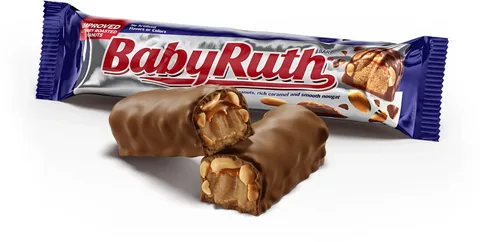
The baby ruth candy bar may look like an ordinary mix of chocolate, peanuts, caramel, and nougat, but its story is anything but ordinary. Behind this classic American candy bar sits a century-old question that still refuses to fade. It is a product shaped as much by public curiosity as by its recipe, carrying a history that connects baseball fame, early marketing tactics, and a naming decision that continues to divide opinion.
What makes it truly stand out is not just its taste but the mystery attached to its identity. Was it really named after a president’s daughter, or did it quietly benefit from the fame of one of baseball’s greatest icons? That single question has kept this candy bar part of conversations long after most candy brands from its era disappeared.
Table of Contents
Ingredients That Define Its Taste
The appeal of the baby ruth candy comes from its simple but carefully balanced ingredients. Each layer plays a role:
- Roasted peanuts for crunch and saltiness
- Caramel for chew and richness
- Nougat for softness and sweetness
- Chocolate-flavored coating for smooth finish
This mix creates a layered texture that feels heavier than many modern candy bars. The peanuts are especially dominant, making the bar more filling than it first appears. Food historians often note that this combination was designed to stand out in early 20th-century candy markets where competition was intense and product similarity was common.
The Early History of the Candy Bar
The baby ruth candy bar was introduced by the Curtiss Candy Company, a Chicago-based business founded by Otto Schnering. During the 1920s, the American candy industry was growing rapidly, and companies were searching for ways to stand apart in a crowded market.
Schnering believed branding mattered as much as taste. Instead of relying only on flavor, he focused on creating strong product identity and memorable marketing. The candy bar originally evolved from an earlier product and was reintroduced with a new name that would soon spark public debate.
At that time, candy bars were priced cheaply, making them accessible to a wide audience. This helped Baby Ruth quickly spread across the United States.
Why Is It Called Baby Ruth?
The naming of the baby ruth candy bar remains one of its most discussed aspects. Curtiss Candy Company stated that the name was inspired by Ruth Cleveland, the daughter of former U.S. President Grover Cleveland. She was widely known as “Baby Ruth” during her childhood. However, many people questioned this explanation. The timing of the candy bar’s release coincided with the peak popularity of baseball star Babe Ruth, leading consumers to draw their own conclusions. The similarity in names created natural public confusion, and the debate never fully disappeared.
Was It Connected to Babe Ruth?
This question continues to follow the candy bar even today. Supporters of the Babe Ruth connection point to timing and public perception. Babe Ruth was already a national sports figure when the candy bar became popular. His fame was growing rapidly, and his name carried strong commercial value.
Others argue the company’s explanation should be taken at face value. They note that Ruth Cleveland was a known historical figure and that businesses often used personal or historical names without celebrity intent. The truth remains debated, and no definitive proof has settled the discussion completely.
Legal Dispute With Babe Ruth
The naming confusion eventually led to a legal challenge involving Babe Ruth himself. At the time, he was exploring business opportunities beyond baseball, including branded merchandise.
The issue centered on whether the candy company had benefited from public association with his name. Babe Ruth’s side argued that consumers naturally linked the candy bar to him, which created commercial value. Curtiss Candy Company maintained its original claim and defended its trademark rights. The court ultimately ruled in favour of Curtiss Candy, allowing the company to continue using the Baby Ruth name. This decision secured the future of the product and reinforced the importance of established branding in trademark law.
Marketing That Made the Candy Famous
The success of the baby ruth candy bar was not only about ingredients or naming—it also came from bold marketing strategies. One of the most famous promotions involved dropping candy bars from airplanes using small parachutes. This unusual campaign drew public attention and newspaper coverage across multiple cities.
At a time when advertising methods were limited, such creative promotions helped the brand stand out in a crowded market. The stunt turned the candy bar into a talking point across communities.
Combined with affordable pricing and wide distribution, these strategies helped establish Baby Ruth as a national product.
Ownership Changes Over Time
Like many legacy brands, Baby Ruth changed ownership multiple times. After its early success under Curtiss Candy Company, the brand became part of larger confectionery corporations over the decades. Each transition brought new distribution networks and updated marketing approaches. Despite ownership changes, the core recipe remained consistent. This helped maintain brand recognition and consumer loyalty. Today, it continues to be produced under a major confectionery group that preserves its traditional identity.
Baby Ruth Candy Bar Nutrition Facts
The baby ruth candyis considered an occasional treat, not a health-focused snack. Its nutritional value comes directly from its ingredients, which include peanuts, caramel, nougat, and a chocolate-flavored coating.
Because peanuts and caramel are energy-dense ingredients, the candy bar is relatively high in calories. A significant portion of these calories comes from fats in the peanuts and added sugars in the caramel and nougat layers.
Sugar is one of the key components of the candy bar’s flavor. It is present in both the nougat and the outer coating, which gives the bar its sweet, rich taste but also increases total carbohydrate content.
Peanuts also add a small amount of protein along with natural fats. This is one reason the candy bar feels more filling compared to lighter, wafer-based sweets.
Overall, this candy bar is best enjoyed in moderation due to its sugar and calorie content. For precise nutritional values, it is always recommended to check the packaging, as figures may vary slightly based on serving size and product updates.
Baby Ruth vs Snickers
The Baby Ruth candy bar is often compared with Snickers because both use a similar base of ingredients: peanuts, caramel, nougat, and a chocolate coating. However, the experience of eating them is quite different.
Baby Ruth leans more toward a nut-heavy profile, while Snickers focuses on a smoother caramel-centred bite. These differences change both texture and flavor perception.
| Feature | Baby Ruth | Snickers |
| Peanut Content | Stronger and more dominant | Present but more balanced |
| Caramel Taste | Light and supportive | Rich and more noticeable |
| Texture | Crunchier and chunkier | Softer and smoother |
| Nougat Layer | Firmer bite | Creamier consistency |
| Overall Feel | Dense and nut-forward | Balanced and caramel-forward |
Interesting Facts About Baby Ruth
The baby ruth candy bar carries a long history filled with surprising details that many consumers are not aware of. Let’s look at some of the facts
1. It was promoted using early aviation marketing, including candy drops from airplanes that drew large public attention.
2. It became one of the first candy bars to achieve nationwide recognition in the United States during the early 20th century.
3. The question around its name has remained active for more than 100 years, making it one of the most discussed candy origins in American history.
4. It has appeared in films, television shows, and other pop culture moments, keeping the brand visible across generations.
5. Despite multiple ownership changes, its core recipe has stayed largely consistent over time.
Conclusion
The baby ruth candy bar is more than just a sweet snack made of peanuts, caramel, nougat, and chocolate coating. Its long history combines early American candy innovation, bold marketing ideas, and a naming story that still creates discussion today. Whether it was inspired by Ruth Cleveland or indirectly linked in public mind to Babe Ruth, the question has helped keep the brand relevant for decades. From airplane promotions to lasting shelf presence, it has stayed familiar across generations. In the end, the candy bar remains a simple treat with a surprisingly rich place in American confectionery history.