

Cotton candy is a popular sweet treat known for its soft texture and sugary taste. You can find it at fairs, carnivals, amusement parks and birthday parties. Although it looks difficult to prepare, you can make it at home with a few basic ingredients and the right equipment.
A cotton candy machine is the easiest way to get the familiar fluffy texture. However, you can also make a hand-spun version using a saucepan, sugar syrup and a whisk. Both methods have different preparation steps, but neither requires professional cooking skills.
If you want to learn how to make cotton candy, this guide covers everything you need to know. From choosing the right sugar to preparing different flavours, you will find simple instructions for making this sweet treat at home.
Table of Contents
What is Cotton Candy Made Of?
Cotton candy is mainly made from granulated sugar. A cotton candy machine heats the sugar until it melts and spins it through tiny openings. As the melted sugar comes into contact with the cooler air, it forms thin strands that collect around the machine’s bowl.
Food colouring and flavouring are sometimes added to give cotton candy different colours and tastes. Popular options include strawberry, vanilla, grape, watermelon and blue raspberry.
For machine-made cotton candy, you generally need granulated sugar or specially prepared floss sugar. If you want to make it without a machine, you will also need water and corn syrup to prepare the sugar mixture.
Cotton candy feels light because its thin sugar strands contain plenty of air between them. However, these strands absorb moisture easily. This is why cotton candy can shrink and become sticky when left uncovered.
Ingredients for Homemade Cotton Candy
Here are the ingredients and quantities required to make homemade cotton candy using both methods.
| Ingredient | Quantity | Purpose |
| Granulated white sugar | 1 cup | Main ingredient for cotton candy |
| Food colouring | 2–3 drops | Adds colour |
| Candy flavouring | ¼ teaspoon | Adds flavour |
| Corn syrup | ½ cup | Used in the hand-spun method |
| Water | ½ cup | Helps prepare sugar syrup |
For machine-made cotton candy:
- 1 cup granulated white sugar or machine-compatible floss sugar
- 2–3 drops food colouring (optional)
- ¼ teaspoon candy-safe flavouring (optional)
For hand-spun cotton candy:
- 2 cups granulated white sugar
- ½ cup light corn syrup
- ½ cup water
- Food colouring (optional)
- Candy flavouring (optional)
For machine-made cotton candy, use only the quantity recommended by your machine’s manufacturer. If you add liquid colouring or flavouring, ensure the sugar is completely dry before use. For the hand-spun method, heat the syrup to approximately 300°F (149°C) using a candy thermometer.
How to Make Cotton Candy Using a Machine

A cotton candy machine is the easiest option for preparing traditional fluffy candy. It melts sugar inside a spinning head and releases fine strands into the surrounding bowl. Follow these steps to make cotton candy at home.
Step 1: Prepare the Sugar
Measure the required quantity of granulated sugar. If you want coloured or flavoured cotton candy, mix in a small amount of suitable food colouring and candy flavouring.
For example, use pink colouring with strawberry flavouring or blue colouring with blue raspberry flavouring. If you use liquid colouring, make sure the sugar dries completely before adding it to the machine. Damp sugar can form lumps and affect the spinning process.
Step 2: Preheat the Machine
Place your cotton candy machine on a stable, level surface. Assemble the bowl and spinning head according to the manufacturer’s instructions.
Switch on the machine and allow it to preheat. Many home models take around 5–10 minutes, but the exact time depends on the appliance.
Proper preheating helps the machine melt the sugar evenly. Check the instruction manual for the recommended heating time.
Step 3: Add the Sugar
Switch off the machine and wait until the spinning head stops completely. Add the recommended quantity of sugar using the measuring scoop supplied with your appliance.
Avoid adding too much sugar at once. Excess sugar can cause clogging or uneven heating. Switch the machine back on. After a short time, you should see fine sugar strands forming around the inside of the bowl.
Step 4: Collect the Sugar Strands
Take a paper cone or wooden stick and hold it inside the bowl, away from the hot spinning head.
Gently rotate the cone around the bowl to collect the sugar strands. As more strands form, continue turning the cone until you have enough cotton candy. Keep your hands away from the spinning head and other heated parts.
Step 5: Shape and Serve
Remove the cone once you have collected the desired amount. Shape the cotton candy gently without pressing the strands together.
Serve it immediately for the best texture. Leaving it exposed to air for too long can make it shrink and become sticky, especially in humid weather.
How to Make Cotton Candy Without a Machine
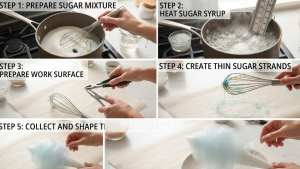
You can also prepare hand-spun cotton candy without purchasing a machine. This method uses heated sugar syrup and a specially prepared whisk to create thin sugar threads.
It requires more attention because the syrup becomes extremely hot. Follow the instructions carefully and keep children away from the cooking area.
Step 1: Prepare the Sugar Mixture
Add the following ingredients to a heavy-bottomed saucepan:
- 2 cups granulated white sugar
- ½ cup water
- ½ cup light corn syrup
- A few drops of food colouring (optional)
- Suitable candy flavouring (optional)
Stir gently until the sugar is evenly moistened.
Step 2: Heat the Sugar Syrup
Place the saucepan over medium heat and allow the mixture to dissolve. Once it starts boiling, avoid stirring it.
Use a candy thermometer to monitor the temperature. The syrup should reach approximately 300°F (149°C), which is the hard-crack stage.
Remove the saucepan from the heat once it reaches the required temperature. Allow the larger bubbles to settle briefly before using the syrup.
Step 3: Prepare Your Work Surface
Cover a clean countertop with parchment paper to catch the sugar strands. Take an inexpensive metal whisk and use suitable wire cutters to trim the rounded ends of its wires. This creates narrow openings that help produce thin sugar threads.
Prepare the whisk before heating the syrup so everything is ready when you need it.
Step 4: Create Thin Sugar Strands
Carefully dip the prepared whisk into the hot syrup. Allow a small amount to coat the wires. Hold it above the parchment paper and move it back and forth to release fine sugar threads. Repeat this movement to create several layers.
The strands will cool quickly as they come into contact with the air. Keep your hands and face away from the hot syrup throughout the process.
Step 5: Collect and Shape the Cotton Candy
Once the strands have cooled, gather them gently and arrange them around a paper cone. Don’t press the threads together because this can make the candy dense. Serve it shortly after preparation.
Important: Hand-spun sugar threads may not have exactly the same soft texture as traditional machine-made cotton candy. The machine method is a better option if you want the familiar fluffy result.
How to Make Different Cotton Candy Flavours
You can prepare different cotton candy flavours by using suitable food colouring and candy flavouring. This is particularly useful when making treats for birthday parties and family gatherings. Here are some popular options.
Strawberry Cotton Candy
Strawberry cotton candy has a sweet, fruity taste and a pink appearance. Mix granulated sugar with pink food colouring and strawberry candy flavouring. Make sure the sugar is completely dry before using it in the machine.
Blue Raspberry Cotton Candy
Blue raspberry is a popular choice because of its bright blue colour and slightly tangy taste. Use blue food colouring and a suitable blue raspberry candy flavouring.
Vanilla Cotton Candy
If you prefer a simple flavour, vanilla cotton candy is a good option. Use concentrated vanilla candy flavouring with plain white sugar. Avoid adding ordinary vanilla extract directly to the machine unless the manufacturer confirms it is suitable.
Grape Cotton Candy
Grape cotton candy has a fruity taste and a purple appearance. Add a small amount of purple food colouring and grape candy flavouring to your sugar.
Watermelon Cotton Candy
Watermelon cotton candy is a fun option for summer parties. Use pink food colouring with watermelon flavouring. You can also prepare a separate green batch to create a watermelon-inspired colour combination.
Tips for Making Soft and Fluffy Cotton Candy
Getting the right texture is important when preparing homemade cotton candy. The strands should be light and thin rather than sticky or tightly packed.
Follow these tips for better results:
- Use the right sugar: Choose granulated sugar or machine-compatible floss sugar.
- Preheat the machine: Give the appliance enough time to reach its operating temperature.
- Avoid excess flavouring: Too much liquid can make sugar damp and cause clumping.
- Choose a dry environment: High humidity can make cotton candy sticky.
- Collect strands quickly: Gather the sugar threads as soon as they appear.
- Don’t press the candy: Wrap the strands loosely around the cone.
- Clean the machine: Remove leftover sugar after the appliance has cooled completely.
If you are using the hand-spun method, monitor the syrup temperature carefully. Sugar that hasn’t reached the correct temperature may produce thick or sticky threads.
Common Problems When Making Cotton Candy and How to Fix Them
Sometimes, homemade cotton candy doesn’t turn out as expected. The sugar may become sticky, the machine may fail to produce strands, or the finished candy may lose its fluffy texture.
Here are some common problems and their solutions.
Why Is My Cotton Candy Not Fluffy?
This can happen when the machine hasn’t heated properly or the sugar isn’t suitable for the appliance. Adding too much sugar at once can also affect the spinning process.
Solution: Preheat the machine according to its instructions and use the recommended sugar quantity. Collect the strands gently without pressing them together.
Why Does Cotton Candy Melt Quickly?
Cotton candy absorbs moisture from the surrounding air. Humid weather can make its thin strands shrink and become sticky.
Solution: Prepare cotton candy in a dry indoor space and serve it immediately. Store any remaining candy in airtight, moisture-resistant packaging.
Why Is My Cotton Candy Machine Smoking?
Smoke or a burning smell may indicate overheating, burnt sugar residue or an appliance problem.
Solution: Switch off and unplug the machine immediately. Allow it to cool before checking for leftover sugar. If the problem continues, stop using the appliance and contact the manufacturer.
Why Are Sugar Strands Not Forming Properly?
The machine may not have reached the correct temperature, or the spinning head may be clogged with leftover sugar.
Solution: Switch off the machine and allow the spinning head to stop. Clean the appliance according to the manufacturer’s instructions and make sure all parts are dry before using it again.
Why Is Homemade Cotton Candy Sticky?
Sticky cotton candy usually indicates exposure to moisture. Incorrect syrup temperature can also affect the texture of hand-spun sugar threads.
Solution: Work in a dry environment, use a candy thermometer and store the finished candy in airtight packaging.
How to Store Homemade Cotton Candy
Homemade cotton candy is best enjoyed immediately after preparation. Its thin sugar strands absorb moisture easily, which can make them shrink and become sticky.
- Use airtight packaging: Place the candy in an airtight container or sealed food-safe bag.
- Keep it dry: Store it in a cool, dry area away from direct sunlight.
- Avoid refrigeration: Condensation can make the sugar strands sticky.
- Don’t press the candy: Arrange it loosely inside the container.
- Prepare it close to serving time: If you are making cotton candy for a party, prepare it as close to the event as possible.
The storage time depends on humidity and packaging quality. Properly sealed cotton candy may retain its quality for several days, but freshly prepared candy generally has the best texture.
Wrapping Up
Making cotton candy at home is simple when you have the right ingredients and equipment. A cotton candy machine is the easiest way to prepare traditional fluffy candy, while the hand-spun method offers an alternative when you don’t have one.
You can experiment with different colours and flavours to prepare treats for birthday parties, family gatherings or a weekend at home. Remember to handle hot sugar carefully, keep moisture away from the finished candy and serve it fresh for the best texture.
Once you understand how to make cotton candy, you can prepare different varieties at home without relying on ready-made treats.
Frequently Asked Questions (FAQs)
Q1. Can You Make Cotton Candy with Regular Sugar?
Yes. Most cotton candy machines that support regular sugar can use granulated white sugar. Some models require specially prepared floss sugar, so check the manufacturer’s instructions before use.
Q2. How to Make Cotton Candy Without a Machine?
You can prepare hand-spun cotton candy using granulated sugar, corn syrup and water. Heat the mixture to approximately 300°F (149°C), then carefully spin it into thin strands using a prepared metal whisk.
Q3. What Ingredients Do You Need to Make Cotton Candy?
The basic ingredients include granulated sugar, food colouring and suitable candy flavouring. For the hand-spun method, you also need corn syrup and water to prepare the sugar syrup.
Q4. Can You Make Cotton Candy with Powdered Sugar?
Powdered sugar is generally unsuitable for traditional cotton candy machines. It contains finely ground sugar and often includes anti-caking ingredients such as cornstarch. Granulated sugar or compatible floss sugar is a better choice.
Q5. Why Does Cotton Candy Melt So Quickly?
Cotton candy absorbs moisture from the air. Humid conditions can make its thin sugar strands shrink and become sticky. Airtight packaging helps protect it from moisture.
Q6. How Long Does Homemade Cotton Candy Last?
Freshly prepared cotton candy is best consumed immediately. When stored in an airtight container in a cool, dry place, it may retain its texture for several days. Humidity and packaging quality affect its shelf life.